The ocean harbors one of Earth’s most complex and mysterious ecosystems, where countless species engage in an elaborate ballet of survival, predation, and symbiosis beneath the waves.

From microscopic phytoplankton to massive whales, every organism plays a crucial role in maintaining the delicate balance of marine food web dynamics. Understanding these intricate connections reveals not only the beauty of ocean life but also the fragility of our planet’s largest ecosystem and its critical importance to human survival.
🌊 The Foundation: Primary Production in Marine Ecosystems
At the base of every marine food web lies an invisible army of microscopic organisms that silently power the entire ocean ecosystem. Phytoplankton, single-celled algae that drift in the sunlit surface waters, conduct photosynthesis on a scale that rivals all terrestrial forests combined. These tiny powerhouses produce approximately 50% of Earth’s oxygen while simultaneously absorbing vast quantities of carbon dioxide from the atmosphere.
Marine primary producers extend beyond phytoplankton to include seaweeds, seagrasses, and photosynthetic bacteria. Each occupies specific ecological niches determined by light availability, nutrient concentrations, and water temperature. The seasonal blooms of phytoplankton, visible from space as swirling green and blue patterns, trigger cascading effects throughout the entire food web, influencing everything from zooplankton populations to whale migration patterns.
The productivity of these primary producers depends heavily on upwelling zones, where deep, nutrient-rich waters rise to the surface. These areas, though comprising only a small fraction of ocean surface area, support some of the most abundant fisheries on Earth. The intricate relationship between ocean currents, nutrient availability, and light penetration creates a dynamic foundation that supports all higher trophic levels.
The Zooplankton Bridge: Connecting Microscopic to Macroscopic
Zooplankton serve as the critical intermediary between primary producers and larger marine animals. This diverse group includes copepods, krill, jellyfish, and larval stages of fish and invertebrates. Despite their small size, copepods alone may represent the most abundant animal group on Earth by biomass, with some scientists estimating their total mass exceeds that of all humans combined.
Antarctic krill exemplify the ecological importance of zooplankton in marine food webs. These shrimp-like crustaceans form massive swarms that can extend for kilometers, creating a vital food source for whales, seals, penguins, and countless fish species. A single swarm may contain millions of tons of krill, representing an enormous transfer of energy from phytoplankton to higher predators.
The vertical migration of zooplankton creates one of nature’s most spectacular daily movements. Each evening, trillions of organisms ascend from the deep ocean to feed in surface waters, then descend before dawn to escape visual predators. This migration transports nutrients and carbon to deeper waters, playing a crucial role in ocean carbon sequestration and global climate regulation.
🐟 Small Fish, Big Impact: Forage Species as Keystone Players
Forage fish occupy a pivotal position in marine food webs, converting zooplankton biomass into packages large enough for substantial predators to pursue. Species like anchovies, sardines, herring, and capelin form enormous schools that attract diverse predators from above and below. These silver clouds of fish represent critical energy transfer points that support commercial fisheries, seabird colonies, and marine mammal populations.
The schooling behavior of forage fish serves multiple functions beyond predator avoidance. Dense aggregations create feeding opportunities for predators that have evolved specialized hunting strategies. Whales execute bubble-net feeding, dolphins coordinate sophisticated herding maneuvers, and seabirds plunge from great heights to intercept fleeing fish. This predator-prey dynamic shapes the behavior, distribution, and evolution of both groups.
Overfishing of forage species creates ripple effects throughout marine ecosystems. When anchovy populations collapsed off Peru in the 1970s due to environmental changes and overfishing, seabird populations plummeted, and predatory fish stocks declined. This ecological disaster demonstrated how removing key species from intermediate trophic levels can destabilize entire food webs, with consequences extending far beyond the targeted species.
Apex Predators: Guardians of Marine Balance
Sharks, orcas, tuna, and other apex predators regulate marine food webs through top-down control. Their hunting strategies influence prey behavior, distribution, and population dynamics in ways that cascade through multiple trophic levels. The “ecology of fear” that predators create affects not just prey mortality but also where prey feed, reproduce, and spend their time.
Shark populations worldwide have declined by more than 70% in recent decades, and their absence creates unexpected consequences. In some ecosystems, mesopredator populations explode when apex predators disappear, leading to overgrazing of herbivores and degradation of critical habitats like seagrass beds and coral reefs. This trophic cascade demonstrates how predators structure communities far beyond their direct consumption effects.
Marine apex predators often undertake extraordinary migrations that connect distant ecosystems. Great white sharks travel between coastal feeding areas and open ocean gathering spots. Bluefin tuna cross entire ocean basins. These migrations distribute nutrients geographically and temporally, creating ecological connections across vast distances and linking food webs that might otherwise remain isolated.
🦀 The Benthic Realm: Life on and Under the Seafloor
The ocean floor supports distinct food webs adapted to life without direct sunlight. Benthic communities depend on marine snow—a continuous rain of organic particles from surface waters—and on living organisms that connect the water column to the bottom. Crabs, lobsters, sea stars, worms, and countless other invertebrates process organic matter, creating nutrient cycling pathways essential for ecosystem function.
Deep-sea hydrothermal vents host food webs based on chemosynthesis rather than photosynthesis. Bacteria oxidize chemicals like hydrogen sulfide emerging from Earth’s crust, forming the foundation for communities that include giant tubeworms, specialized crabs, and unique fish species. These oases of life in the abyssal darkness reveal alternative pathways for energy capture and demonstrate life’s remarkable adaptability.
Coral reefs exemplify the complexity of benthic food webs in shallow tropical waters. The symbiotic relationship between corals and photosynthetic algae creates three-dimensional structures that support extraordinary biodiversity. Herbivorous fish graze algae, predators hunt smaller fish, and scavengers recycle nutrients. The reef’s calcium carbonate structure, built over millennia, provides habitat complexity that enables niche partitioning and species coexistence.
Microbial Loop: The Ocean’s Invisible Recyclers ♻️
Marine microbes process more organic matter than all visible organisms combined. The microbial loop describes how bacteria and archaea consume dissolved organic matter, which is then eaten by protozoans, which in turn become food for zooplankton. This pathway recaptures nutrients that would otherwise sink beyond the reach of photosynthetic organisms, dramatically increasing ecosystem efficiency.
Viruses, though not technically alive, play crucial roles in marine food webs. Marine viruses infect bacteria, phytoplankton, and other microorganisms at staggering rates, releasing cellular contents that other microbes can utilize. Viral shunt processes redirect carbon and nutrients through microbial pathways rather than allowing them to transfer to higher trophic levels, fundamentally altering energy flow patterns.
Nitrogen-fixing bacteria convert atmospheric nitrogen into forms usable by other organisms, addressing a key limiting nutrient in many marine environments. Cyanobacteria like Trichodesmium form visible surface blooms in nutrient-poor tropical waters, injecting new nitrogen into ecosystems and supporting productivity that would otherwise be impossible. These invisible processes underpin the entire food web structure.
🌡️ Climate Change: Disrupting Ancient Connections
Rising ocean temperatures alter marine food web dynamics in profound ways. Species shift their ranges poleward, seeking cooler waters and disrupting long-established community structures. Warm-water species expand into previously temperate zones while cold-adapted species face shrinking habitats. These range shifts create novel species interactions with unpredictable consequences for ecosystem stability and function.
Ocean acidification threatens organisms that build calcium carbonate structures, including corals, mollusks, and some plankton species. As atmospheric carbon dioxide dissolves in seawater, it lowers pH and reduces carbonate ion availability. Pteropods, tiny swimming snails that form a critical food source for juvenile salmon and other fish, show shell dissolution in increasingly acidic waters, threatening food web connections.
Deoxygenation creates expanding dead zones where marine life cannot survive. Warming waters hold less dissolved oxygen while simultaneously increasing metabolic demands. Nutrient pollution exacerbates oxygen depletion through algal blooms and subsequent decomposition. These zones fragment habitats, compress species ranges, and alter predator-prey dynamics as organisms crowd into oxygenated refugia.
Human Impacts: We Are Part of the Web
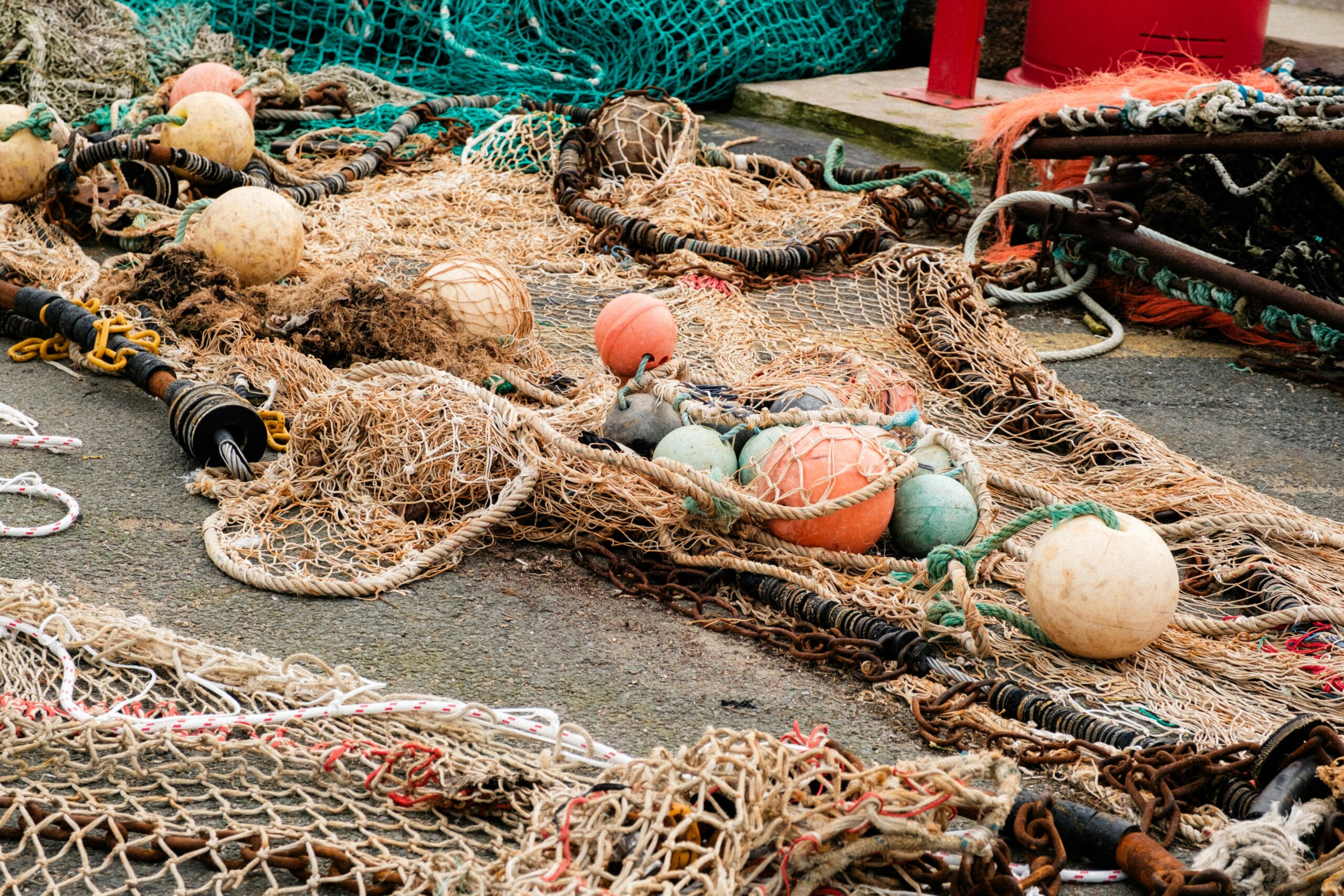
Commercial fishing removes millions of tons of biomass from marine food webs annually. While humans have harvested ocean resources for millennia, industrial-scale fishing operates at unprecedented intensity and efficiency. Bottom trawling destroys benthic habitats. Bycatch kills non-target species including dolphins, turtles, and seabirds. Ghost fishing by abandoned gear continues capturing animals indefinitely.
Plastic pollution introduces persistent contaminants into every level of marine food webs. Microplastics are consumed by zooplankton and small fish, accumulating in predator tissues through biomagnification. Chemical additives and absorbed pollutants pose unknown risks to organism health and reproductive success. Entanglement and ingestion of larger plastic items cause direct mortality across species from sea turtles to whales.
Coastal development destroys critical habitats including mangroves, salt marshes, and seagrass beds that serve as nurseries for commercially important fish species. These habitats also provide storm protection, water filtration, and carbon sequestration. Their loss simplifies food webs, reduces productivity, and eliminates ecosystem services worth billions of dollars annually.
🔬 Emerging Technologies: New Windows into Ocean Life
Advances in marine technology reveal previously hidden aspects of food web dynamics. Satellite tracking devices monitor individual animal movements across ocean basins, revealing migration patterns and habitat use. Acoustic telemetry arrays create networks that detect tagged animals, building detailed pictures of spatial ecology and species interactions. Underwater drones equipped with cameras capture predator-prey encounters in their natural context.
Environmental DNA analysis allows scientists to detect species presence from water samples without observing the organisms themselves. This technique revolutionizes biodiversity assessments and enables monitoring of rare or cryptic species. By analyzing genetic material in seawater, researchers construct community composition profiles and track temporal changes with unprecedented efficiency.
Computer modeling integrates vast datasets to simulate marine food web dynamics under different scenarios. These models help predict ecosystem responses to fishing pressure, climate change, and management interventions. While simplified representations of reality, they provide valuable tools for testing hypotheses and informing conservation decisions when real-world experiments would be impractical or unethical.
Conservation Solutions: Protecting Ocean Networks 🛡️
Marine protected areas exclude or limit human activities in designated zones, allowing ecosystems to function with reduced interference. Successful MPAs show increased biomass, larger individual organisms, and enhanced biodiversity. Benefits extend beyond boundaries as larvae disperse to surrounding areas and adult animals undertake feeding migrations. Strategic MPA networks can protect entire ecosystems while maintaining sustainable fisheries.
Ecosystem-based fisheries management considers entire food webs rather than managing single species in isolation. This approach accounts for predator-prey relationships, habitat requirements, and climate effects. Setting catch limits based on ecosystem models rather than single-species assessments reduces risks of unintended consequences and maintains food web structure and function.
Reducing land-based pollution requires watershed management that addresses agricultural runoff, sewage discharge, and industrial contamination. Nutrients, sediments, and chemicals that enter coastal waters from terrestrial sources alter food web dynamics by stimulating algal blooms, degrading water quality, and introducing toxins. Integrated coastal zone management connects land and sea through comprehensive planning.
The Future Ocean: Resilience and Adaptation
Marine food webs demonstrate remarkable resilience to disturbance when given opportunity to recover. Historical examples of ecosystem recovery following protection show that even severely degraded systems can rebound. However, resilience has limits, and multiple stressors acting simultaneously may push ecosystems past tipping points into alternative stable states that resist restoration efforts.
Understanding functional redundancy—multiple species performing similar ecological roles—helps predict ecosystem responses to species loss. Communities with high functional diversity typically show greater resistance to disturbance and faster recovery. Protecting biodiversity maintains this insurance against environmental change and preserves ecosystem services that human societies depend upon.
The ocean’s future depends on decisions being made today. Reducing greenhouse gas emissions, protecting critical habitats, managing fisheries sustainably, and reducing pollution all contribute to maintaining marine food web integrity. These actions require international cooperation, long-term commitment, and recognition that healthy oceans provide irreplaceable benefits to all life on Earth. The intricate dance of marine food web dynamics continues, and humanity must decide whether we will be partners in its preservation or witnesses to its unraveling.